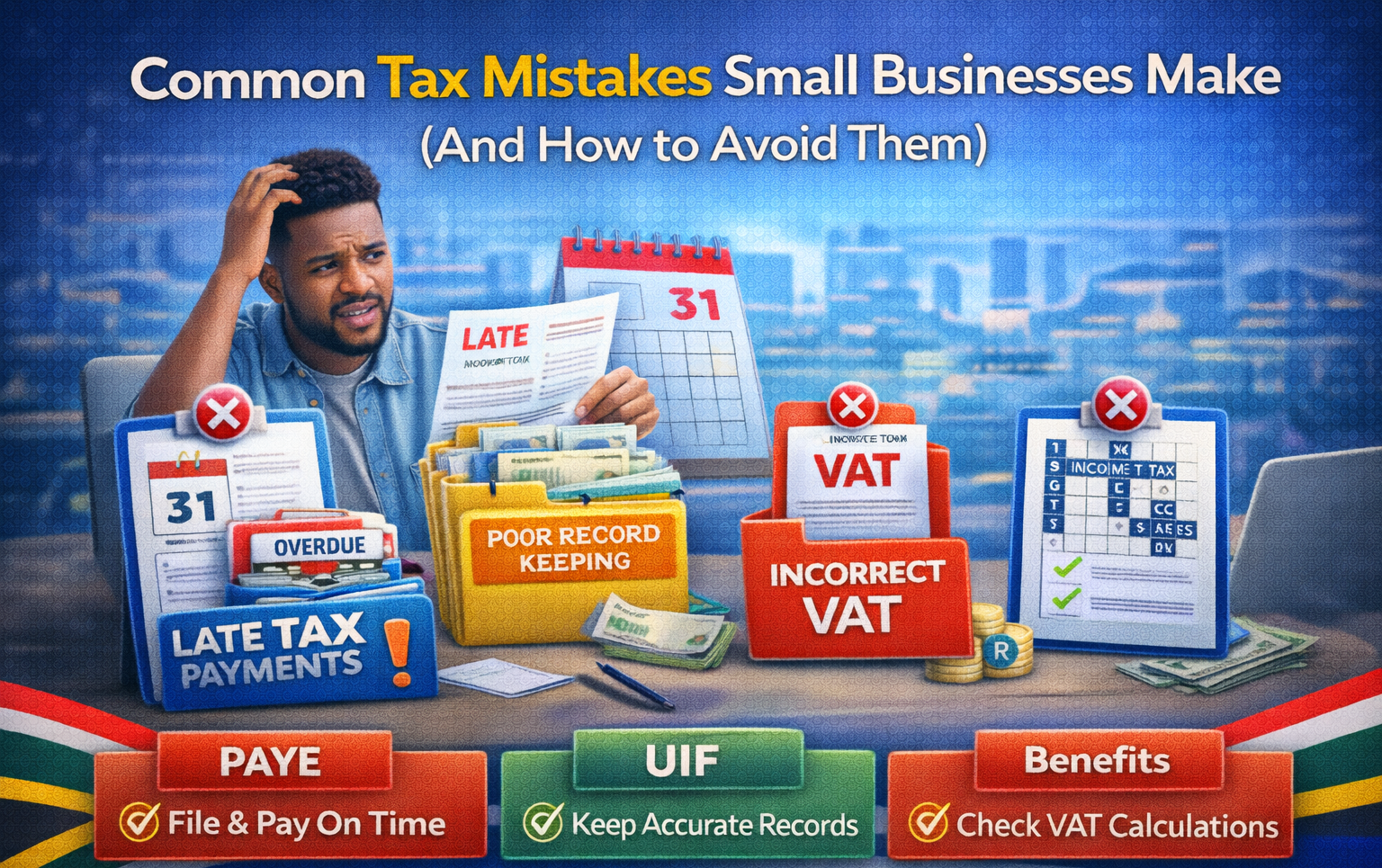
Running a small business in South Africa is exciting — but tax mistakes can quietly cost you money, credibility, and even funding opportunities.
Many business owners don’t intentionally avoid tax — they simply don’t understand the system.
Let’s look at the most common tax mistakes small businesses make and how to avoid them.
Not Registering for Tax at All
Some entrepreneurs assume:
“I’m too small.”
“I just started.”
“I’m not making profit yet.”
But once you register a company with
Companies and Intellectual Property Commission (CIPC)
you are automatically required to comply with tax laws.
And if you operate as a sole proprietor, you are still required to register for income tax if you earn above the threshold.
Ignoring tax registration can lead to penalties and blocked funding applications.
Missing Tax Return Deadlines
One of the most common mistakes is:
❌ Not submitting returns on time
❌ Forgetting to file “nil” returns
❌ Ignoring SARS reminders
The
South African Revenue Service (SARS)
charges penalties for late submissions — even if you owe no money.
Important: Submitting returns is mandatory, even if your business made no income.
Mixing Personal and Business Finances
This causes serious confusion during tax season.
Common issues:
Using one bank account for everything
Paying personal expenses from business funds
No clear record of income
This makes it difficult to:
Calculate profit correctly
Claim deductions
Prove compliance
Always separate business and personal accounts.
Registering for VAT Too Late (or Too Early)
Many businesses:
Forget that VAT registration becomes mandatory at R1 million turnover
Register too late and face penalties
Register too early without understanding cash flow impact
VAT requires strict record-keeping and regular submissions.
If unsure, get professional advice before registering voluntarily.
Not Keeping Proper Records
SARS may request:
Invoices
Receipts
Bank statements
Payroll records
If you cannot provide supporting documents, deductions may be denied.
Keep records for at least 5 years.
Use:
Accounting software
Organized digital folders
Monthly bookkeeping
Not Setting Aside Money for Tax
A very common mistake:
Spending all business income without reserving money for tax.
Remember:
VAT collected is not your money
PAYE deducted belongs to SARS
Income tax is calculated on profit
Open a separate “tax savings” account and transfer a portion monthly.
Ignoring PAYE, UIF & SDL Requirements
If you employ staff, you must register for:
PAYE
UIF
SDL (if payroll exceeds threshold)
Failure to register payroll taxes can result in audits and fines.
Many small businesses think they can delay this — but SARS can trace payments through banking records.
Not Applying for a Tax Clearance Certificate
Without tax compliance, you cannot:
Apply for government tenders
Access funding
Register on supplier databases
Maintaining good standing ensures your business opportunities remain open.
Underreporting Income
Some business owners:
Don’t declare cash sales
Omit side income
Guess revenue instead of calculating
This is risky and can trigger audits.
SARS uses data-matching systems to verify income from banks and third parties.
Transparency protects your business long-term.
Trying to Handle Everything Without Understanding Tax
Tax laws can be complex.
Common problems:
Misunderstanding allowable deductions
Incorrect VAT calculations
Filing wrong tax types
Getting guidance early can prevent years of compliance issues.
How to Avoid These Mistakes
✔ Register correctly
✔ Submit returns on time
✔ Separate business finances
✔ Keep accurate records
✔ Set aside tax money monthly
✔ Stay informed
Tax compliance is not just about avoiding penalties — it builds credibility.
Final Thoughts
Most tax problems don’t happen because businesses are dishonest — they happen because business owners are overwhelmed.
The good news?
Tax compliance becomes simple when you:
Understand your obligations
Stay organized
Act early
Avoiding these common mistakes protects your business, your funding eligibility, and your peace of mind.
Career Store