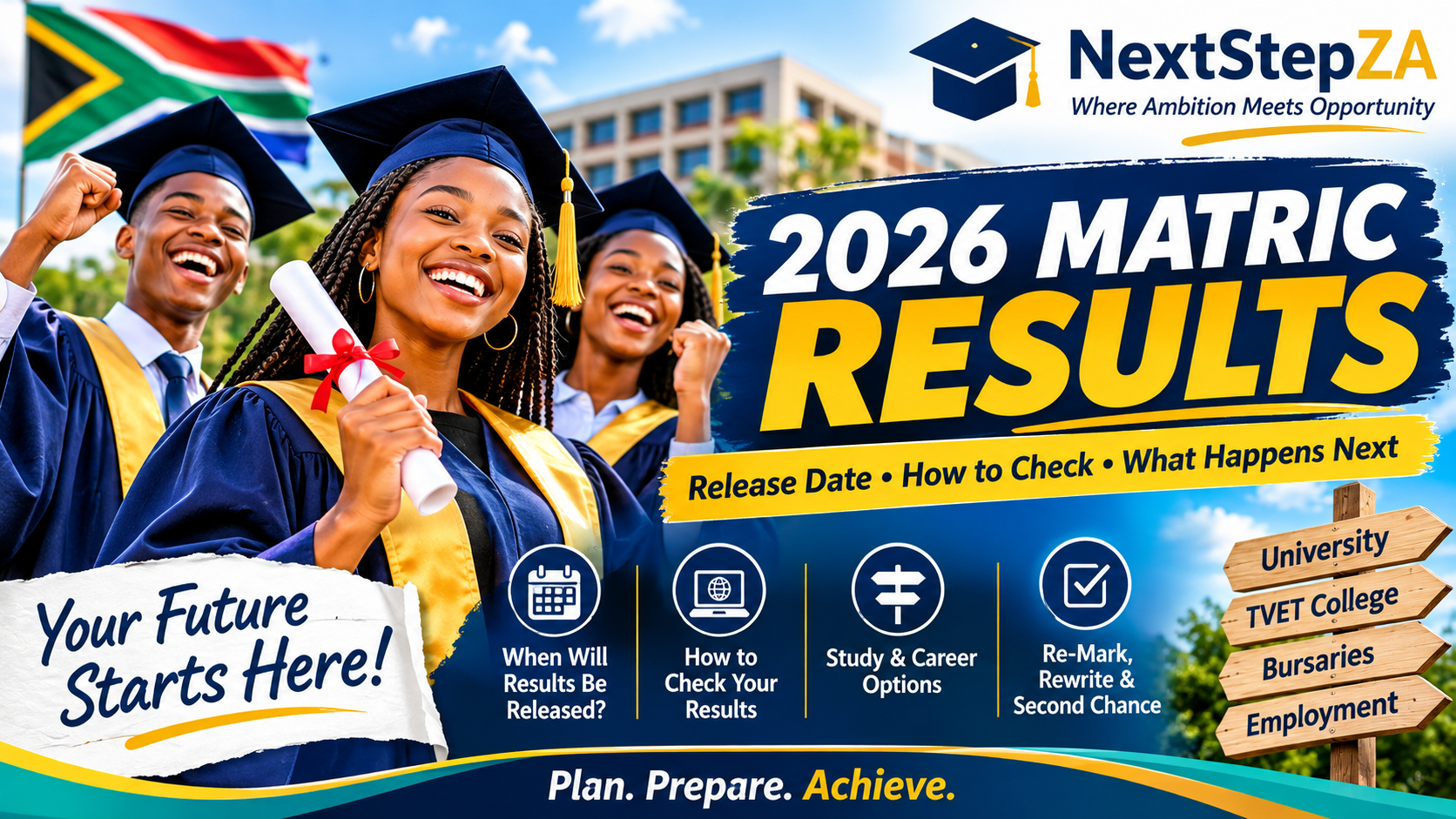
The wait for matric results is one of the biggest moments in a learner’s academic journey. For thousands of South African learners, the 2026 National Senior Certificate (NSC) examinations represent the end of their school years and the beginning of a new chapter.
Whether you are planning to attend university, study at a TVET college, apply for a bursary, look for employment or improve your marks, knowing what happens after matric is important.
If you are part of the Class of 2026, this guide explains when the results are expected, how to access them, what to do if you are unhappy with your marks and which opportunities you can explore after receiving your results.
When will the 2026 matric results be released?
As of 5 November 2026, the Department of Basic Education (DBE) has not yet announced the official national release date for the 2026 National Senior Certificate results.
The October/November 2026 NSC examinations began on 13 October and are scheduled to conclude on 26 November 2026.
After the examinations, candidates’ scripts must go through marking, moderation and quality-assurance processes before the final results are approved and released.
Matric results are generally released in January following the examination year. However, learners should wait for an official announcement before relying on a specific date.
Important: NextStepZA will update this article once the Department of Basic Education confirms the national results announcement and individual results-access dates.
How to check your 2026 matric results
When the results become available, learners should use official channels to access their results.
1. Check through your school
Your school or examination centre is an important point of contact.
Learners should contact the school where they wrote their examinations to find out when and how they can collect their Statement of Results.
The Statement of Results is an important document that you may need when applying for further studies or other opportunities.
2. Check through the Department of Basic Education
The Department of Basic Education provides an official examination-results service.
Visit:
https://www.education.gov.za/MatricResults/ExamResults.aspx
Follow the instructions provided on the official page when the 2026 NSC results become available.
Please note that the DBE’s online results arrangements may differ for full-time NSC candidates and part-time candidates. Part-time candidates should confirm the correct process with their examination centre.
3. Check through your provincial education department
Provincial education departments may publish additional information about accessing matric results.
Learners should follow announcements from their own province rather than assume that all provinces use identical arrangements.
Official provincial education websites include:
Gauteng: https://www.education.gpg.gov.za/
Mpumalanga: https://education.mpg.gov.za/
Limpopo: https://www.edu.limpopo.gov.za/
KwaZulu-Natal: https://www.kzneducation.gov.za/
Eastern Cape: https://www.ecdoe.gov.za/
Western Cape: https://www.westerncape.gov.za/education
Free State: https://www.fsdoe.fs.gov.za/
North West: https://education.nwpg.gov.za/
Northern Cape: https://ncdoe.ncpg.gov.za/
Always confirm that you are using an official government website.
What information do you need to check your matric results?
Keep the following information ready:
Your examination number.
Your identity document, if required by the official platform.
The contact details of your school or examination centre.
Your registered examination details.
Keep your examination information private. Avoid sharing your ID number or examination number with strangers or unverified websites claiming they can access your results.
What if your matric results do not appear?
Do not panic if your results are not immediately available online.
The Department of Basic Education explains that some candidates’ results may be excluded from its online results service for technical reasons.
If your results do not appear:
Contact the school or examination centre where you wrote.
Ask whether your results have been released.
Contact your provincial education department or district office if necessary.
Follow the instructions provided by the relevant examination authority.
Do not assume that a missing online result automatically means you have failed.
What if you are unhappy with your matric results?
If you believe that your marks do not accurately reflect your performance, you may be able to apply for a re-mark or re-check.
These are different processes:
Re-mark: Your examination script is marked again by another marker.
Re-check: Your script is checked to confirm that all answers were marked and that the marks were correctly calculated and recorded.
Applications must be submitted according to the instructions and deadlines issued by the relevant education department.
Fees may apply, and the application period is usually limited. Check the official announcement immediately after results are released.
What happens if you fail matric?
Not receiving the results you hoped for does not mean your future is over.
There are options available to candidates who want another opportunity to complete their National Senior Certificate or improve their marks.
Depending on your circumstances and eligibility, you may be able to:
Register for a future NSC examination.
Rewrite selected subjects.
Improve marks in subjects where you did not achieve the required results.
Enquire about the Second Chance Matric Programme.
Seek academic support and additional learning resources.
Explore the Second Chance Matric Programme
The Department of Basic Education’s Second Chance Matric Programme supports qualifying candidates who want to complete or improve their matric results.
Visit the official Department of Basic Education website for programme information:
Do not give up on your education because of one examination result. There may be another route available to help you reach your goals.
What can you study after matric in South Africa?
Once you receive your results, you can start exploring opportunities for further education and training.
Your available options will depend on your results, admission requirements, finances and the courses offered by different institutions.
1. Universities
Universities offer undergraduate qualifications such as degrees, diplomas and other recognised programmes.
Admission requirements differ between institutions and courses. Meeting the minimum requirements does not automatically guarantee admission.
Learners should check the admission requirements of their preferred institutions and programmes.
2. TVET Colleges
Technical and Vocational Education and Training (TVET) colleges offer practical and career-focused programmes.
These institutions provide opportunities in areas such as:
Engineering studies.
Business management.
Finance and accounting.
Information technology.
Hospitality and tourism.
Electrical and mechanical studies.
TVET colleges can be a valuable option for learners who want to develop practical skills and prepare for employment.
3. Bursaries and financial assistance
If you need financial support for further studies, explore bursaries and other funding opportunities.
One important option is the National Student Financial Aid Scheme (NSFAS), which provides financial assistance to eligible students studying at approved public universities and TVET colleges.
Visit the official NSFAS website:
Always check the eligibility criteria, application dates and required documents before applying.
4. Learnerships and internships
Not every matriculant wants to go directly to university or college.
Learnerships and internships can provide opportunities to develop workplace skills and gain practical experience.
Look out for programmes offered by companies, SETAs, government departments and other recognised organisations.
What if you want to work after matric?
If you are planning to enter the job market, you can start preparing before the results are released.
Consider the following steps:
Prepare a professional CV.
Gather certified copies of your qualifications and identity document when needed.
Create a professional email address.
Develop basic computer and communication skills.
Search for entry-level employment opportunities.
Explore learnerships and workplace training programmes.
Be cautious of job advertisements requesting payment for guaranteed employment.
You do not need to have your entire career figured out immediately after matric. Start by identifying opportunities that match your interests and qualifications.
Advice for parents and guardians
Matric results can be an emotional experience for the entire family.
Parents and guardians should remember that learners may respond differently to their results. Some may be excited, while others may feel disappointed or uncertain about their next step.
Encourage learners to explore their options and make informed decisions.
A matric result is important, but it does not determine a person’s entire future.
Your next chapter starts after matric, and NextStepZA is here to help you find your next step.
About NextStepZA
NextStepZA is a South African career and education opportunities platform connecting young people with jobs, learnerships, internships, bursaries, study opportunities and career resources.
Where Ambition Meets Opportunity.
Disclaimer: This article is for general information purposes. Results dates, examination procedures, application deadlines and eligibility requirements may change. Always confirm information with the Department of Basic Education, your provincial education department or the relevant institution.
Frequently Asked Questions About the 2026 Matric Results
The national release date has not been officially confirmed as of 5 November 2026. The Department of Basic Education is expected to communicate the confirmed arrangements through its official channels.
Learners should check through their school or examination centre and follow the official Department of Basic Education and provincial education department announcements.
The DBE provides an official online examination-results service. Learners should follow the instructions and availability notices published for the 2026 NSC results.
Contact your school or examination centre first. If necessary, contact your provincial education department or district office for assistance.
There are opportunities for eligible candidates to complete or improve their NSC results through future examinations and relevant support programmes. Confirm the registration requirements and deadlines with the DBE or your provincial department.
Yes, if you meet the admission requirements for your chosen course and institution. Admission is subject to the institution’s selection criteria and available spaces.
Yes. There are bursaries and financial assistance opportunities for qualifying students. NSFAS is one option for eligible students attending approved public universities and TVET colleges.